


“Can we see the real product, and can it really fit American kids’ learning habits?”
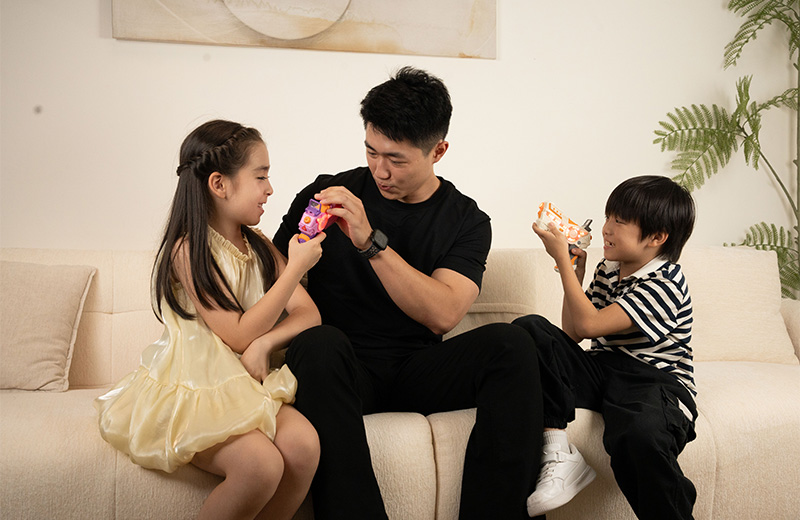
So instead of doing endless video calls or long PowerPoint decks, we decided to start with something more practical — sending them a real PULSE V-1 sample.
Step 1: Sample Shipping to the U.S.
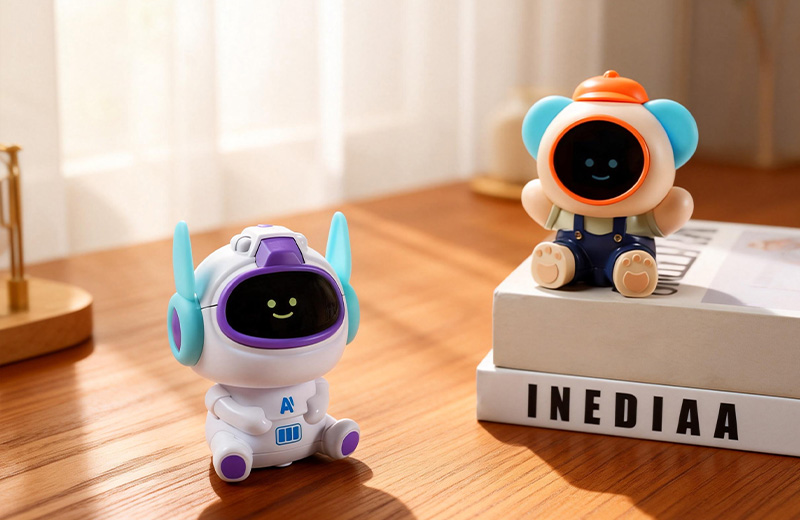
After confirming the basic configuration, we prepared a fully functional PULSE V-1 demo unit.
This wasn’t a “display-only” sample. It was a real product with:
Shooting Mode and Smart Mode enabled
Built-in camera for object scanning
Default English voice pack
A basic U.S.-focused demo knowledge library
We shipped the sample directly to their office in the U.S. using standard international express shipping. The whole process, from confirmation to delivery, took about one week.
Once they received it, we guided their team through setup via a short video call. No complicated steps — connect to Wi-Fi, power it on, switch modes, and start playing.
Their feedback was pretty straightforward:
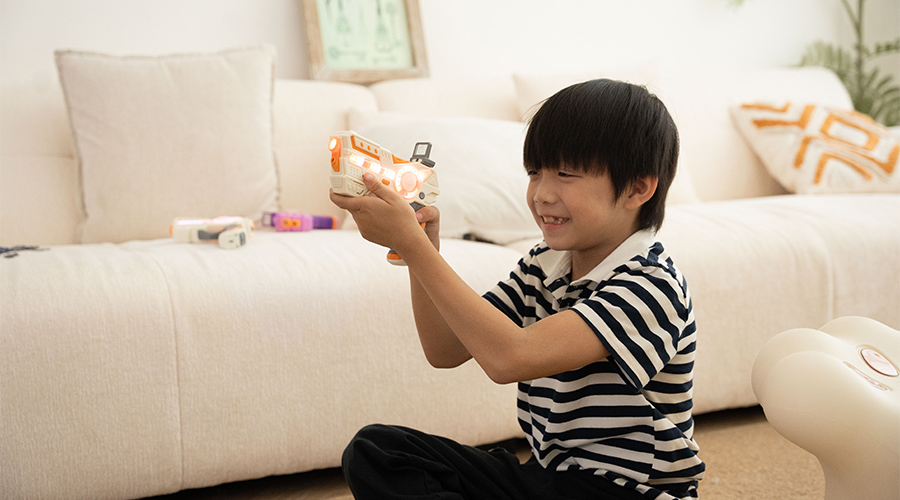
“It feels like a toy first, not a learning device pretending to be a toy.”
That was exactly what we wanted to hear.
Step 2: Explaining Knowledge Base Customization
After the hands-on experience, the conversation naturally moved to customization — especially the knowledge base.
We explained that PULSE V-1 doesn’t rely on a fixed, generic content library. Instead, the knowledge base can be customized based on country, age group, and brand positioning.
For American kids, we usually suggest focusing on a few core areas:
1. Everyday Object Recognition
Using the built-in camera, kids can scan common objects at home or in school:
Fruits and food (apple, banana, sandwich)
Household items (chair, lamp, backpack)
Simple tools and toys
The AI doesn’t just name the object. It explains it in kid-friendly English, often adding a short fun fact to keep things light.
2. Basic STEM Concepts
For U.S. parents, STEM is a big deal.
So the knowledge base can include:
Simple physics ideas (speed, light, energy)
Basic math logic
Intro-level science explanations
All explained in short, spoken interactions — no textbook language.
3. Storytelling with Local Context
Instead of using overused fairy tales, we can load original storylines that feel familiar to American kids:
Space adventures
Superhero-style missions
Everyday “hero moments” like helping friends or solving small problems
Stories are progressive, not repetitive, so kids don’t hear the same thing again and again.
4. Language and Expression Practice
PULSE V-1 encourages kids to talk back.
The AI asks simple questions, reacts to answers, and keeps conversations going — which helps with:
Spoken English confidence
Vocabulary expansion
Natural expression, not scripted replies
Step 3: Client Feedback
After about two weeks of internal testing, the client told us something interesting.
They said their team initially thought the customization would be “heavy” or overly technical.
But in practice, it felt more like choosing what kind of personality and knowledge the toy should have.
That’s when they realized PULSE V-1 wasn’t just a smart toy — it was a platform they could shape for their own market.
In short, shipping a real sample helped build trust quickly, and showing how the knowledge base adapts to American kids made the value very clear.
Not abstract. Not theoretical. Just something you can hold, test, and actually watch kids interact with.